

Gold is a long-duration claim on monetary credibility. It becomes more valuable when real rates, reserve preferences and confidence in sovereign liabilities move against the dollar.
Gold's advance from around $2,330 an ounce overtook Bank of America's forecast of a move above $3,000. The gain reached roughly 45% when gold touched $3,390 on April 21, followed by $3,500 the next day. The market then consolidated. A renewed geopolitical shock pushed the metal above that range again.
A volatile market is a good time to revisit the logic rather than chase the latest price.
Gold has no issuer, contractual cash flow or scheduled maturity. It therefore carries no issuer-default risk, but its market price remains volatile and its inflation-hedging performance varies by horizon. Its value rests on scarcity and a cross-sovereign consensus, so price reflects the market's view of sovereign credit and liquidity.
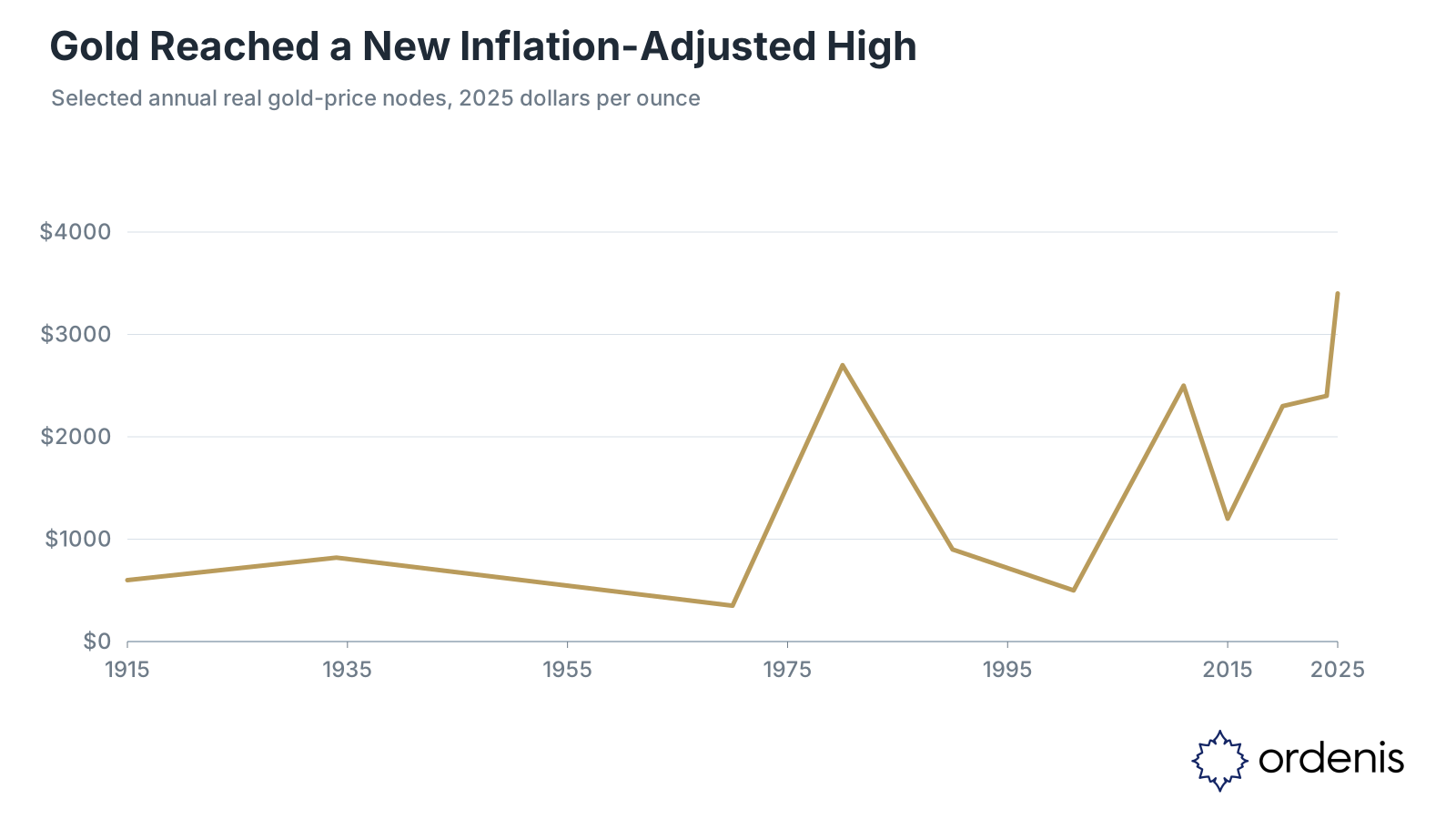
The “return” of gold means more than a new nominal high. It is a renewed use of an asset without a contractual counterparty, whose value can remain relevant when the relative attractiveness of currencies and sovereign liabilities changes. The dollar still prices gold; the relative price also provides a market test of confidence in the dollar.
Currencies issued by earlier hegemons—the pound, the Spanish dollar and the Dutch guilder—depended on sovereignty, liquidity and confidence in the issuer. Gold is different. It is supranational, portable across cycles and free of an obligor. As the old line puts it, the strongest credit is the credit that needs no credit.
Three variables explain the current move: real rates, official reserves and retail hedging.
1. Real rates
Gold has no cash flow, so the real yield on a ten-year inflation-protected Treasury (TIPS) is one measure of its opportunity cost. Gold has often been negatively related to real yields, but the magnitude varies by sample and horizon. When real yields rise in a low-inflation environment, gold usually faces pressure.
That relationship weakened after 2022. Gold and Treasury yields became less consistently related, weakening a single-factor explanation and suggesting that demand and reserve-management motives also mattered. The lag between rate changes and gold returns is variable and can extend beyond the first policy move. The implied return on productivity investment is another variable that can move opposite to gold.
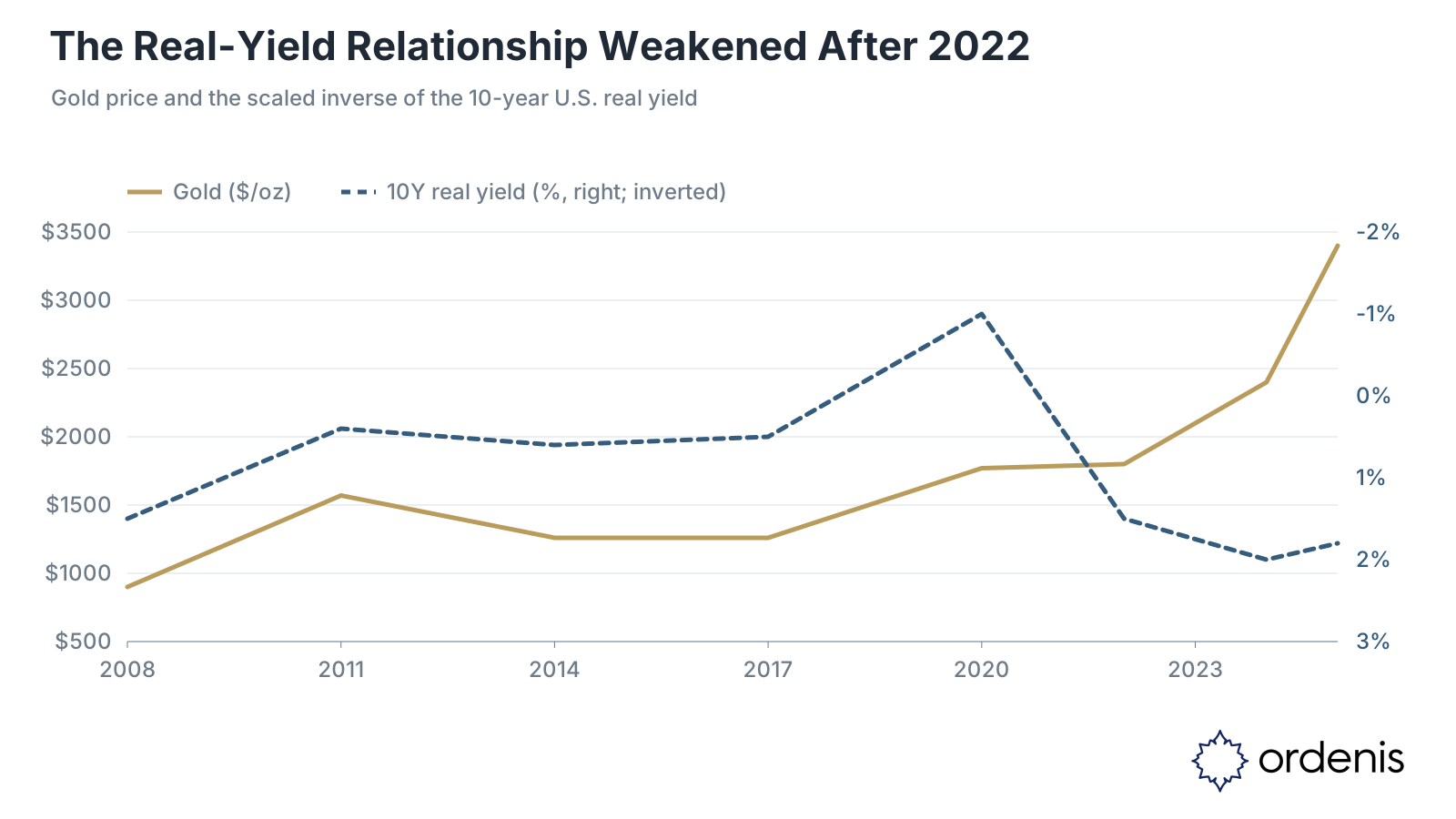
Over a full cycle, real rates remain a central anchor for gold, while Treasuries remain the central man-made monetary asset. When credit is extended, inflation rises or confidence in a currency is diluted, gold can recover part of its monetary function.
2. Official reserves
The gold standard is no longer the operating framework, but official-sector demand remains material. From 2022 through 2024, central banks made annual net purchases above 1,000 tonnes for three consecutive years. The shift is consistent with reserve diversification, duration management and geopolitical risk.
The United States holds about 8,133 tonnes. At the statutory certificate price of $42.22 per ounce, the official accounting value is far below the market value. At the prices used here, those holdings are worth roughly $0.9 trillion, equivalent to 13.7% of Federal Reserve assets at the same measurement date.
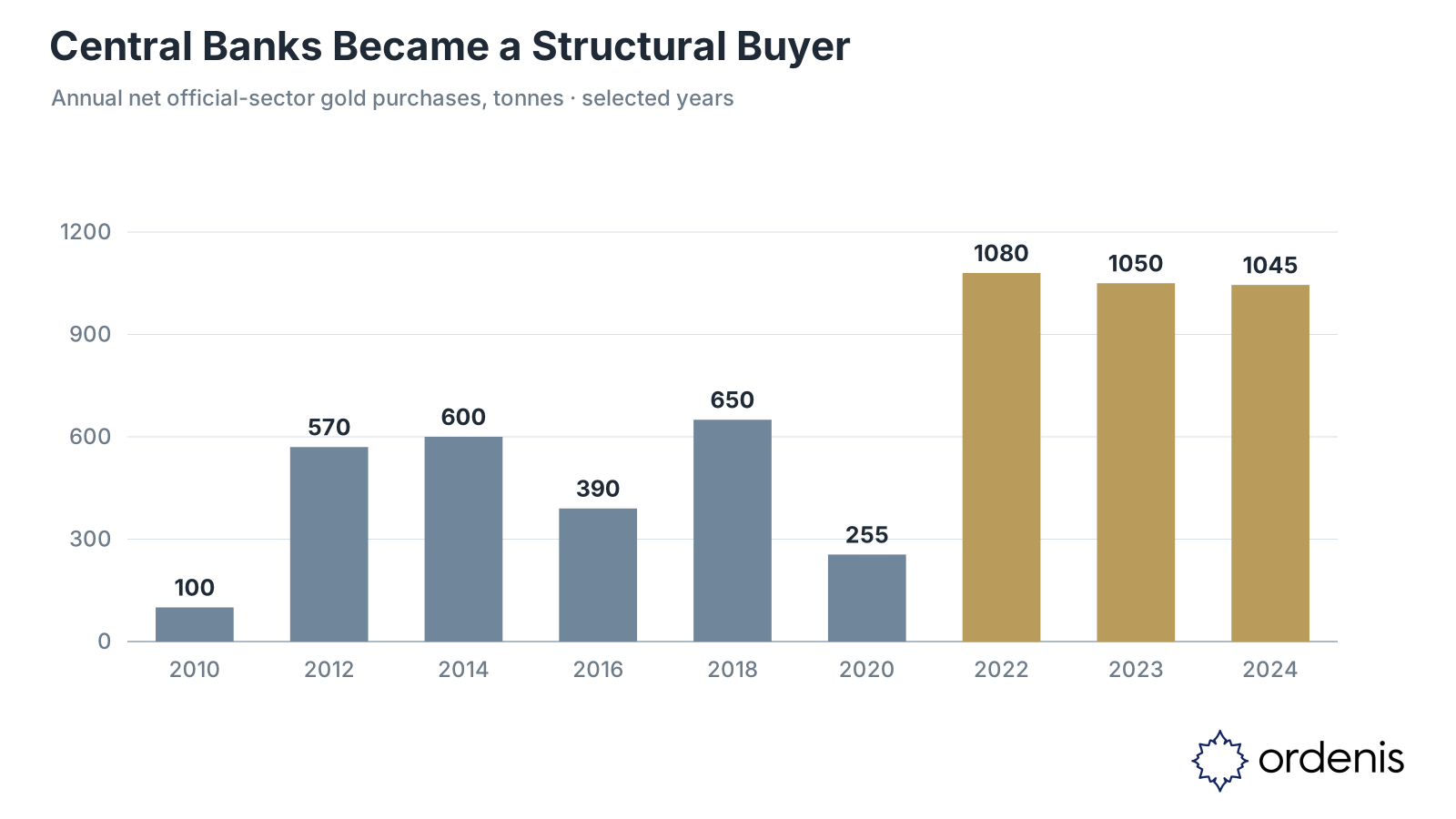
China has been one of the most consistent official-sector buyers since 2019. Its reserve mix is being balanced across domestic bonds, risk assets and gold. As the renminbi's regime evolves, gold can serve as an additional reference for domestic purchasing power.
3. Retail hedging
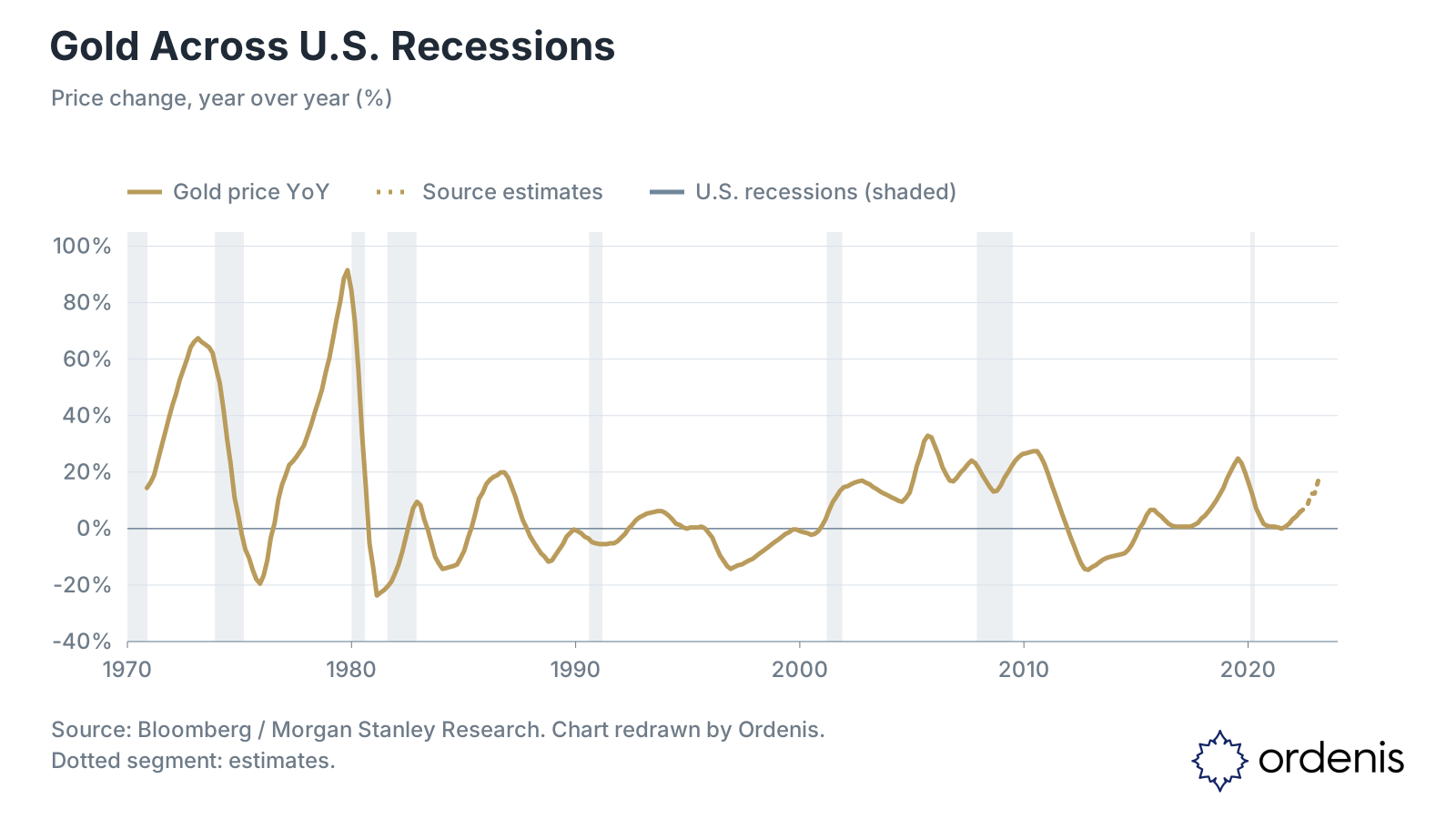
Gold is widely used as a hedge against uncertainty. During several U.S. stress episodes, the metal rose as the VIX rose, although the relationship is not stable in every period. It can provide convex exposure to market stress without behaving like a contractual option.
Gold ETFs represent only around 2% of total gold demand, but their flows reveal the price-setting margin. Asian funds have recorded nine consecutive quarters of net inflows. In GLD, roughly 42% of holdings are institutional and 58% are attributed to households, giving the market a broad and persistent bid.
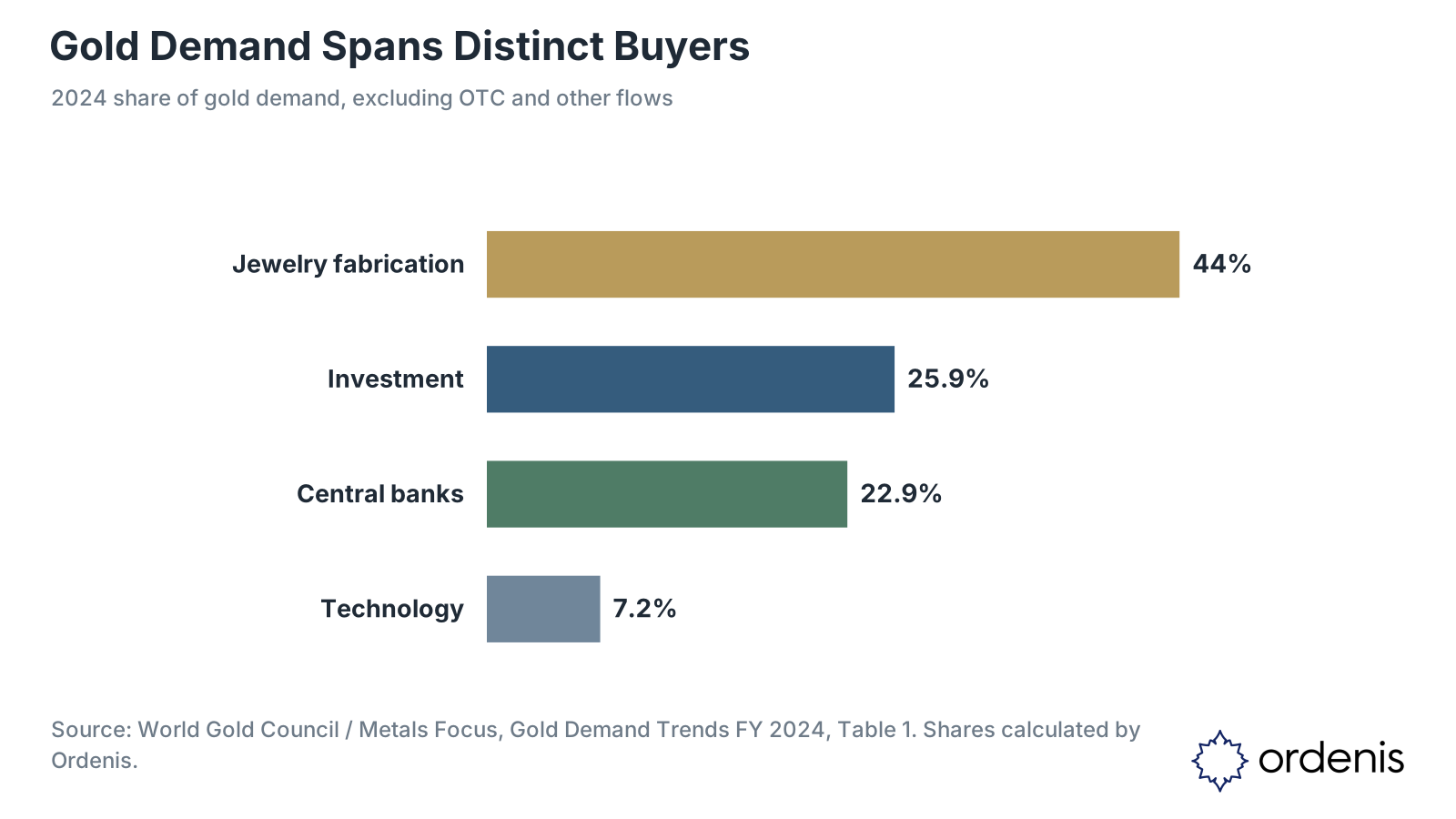
Jewelry fabrication accounted for about 44% of 2024 gold demand excluding OTC and other flows. It is a large part of the physical market, although purchasing volumes tend to weaken as prices rise. Household buyers also respond to inflation, economic stress and war risk. Gold offers a way to own an asset whose value does not depend on a contractual promise from an issuer.
Inflation, credit spreads, the dollar index, futures positioning, mine supply and SDR collateral ratios can improve a price model's fit. They are mostly effects of the three main forces above, not independent causes.
Gold remains a long-term monetary theme whose price is set at the intersection of real rates, reserve policy and liquidity. The path will be volatile because those forces do not move on the same clock.