

The dollar remains the dominant reserve and funding currency, but the conditions supporting that position are changing. This article examines how capital flows, Treasury-market structure and reserve preferences interact.
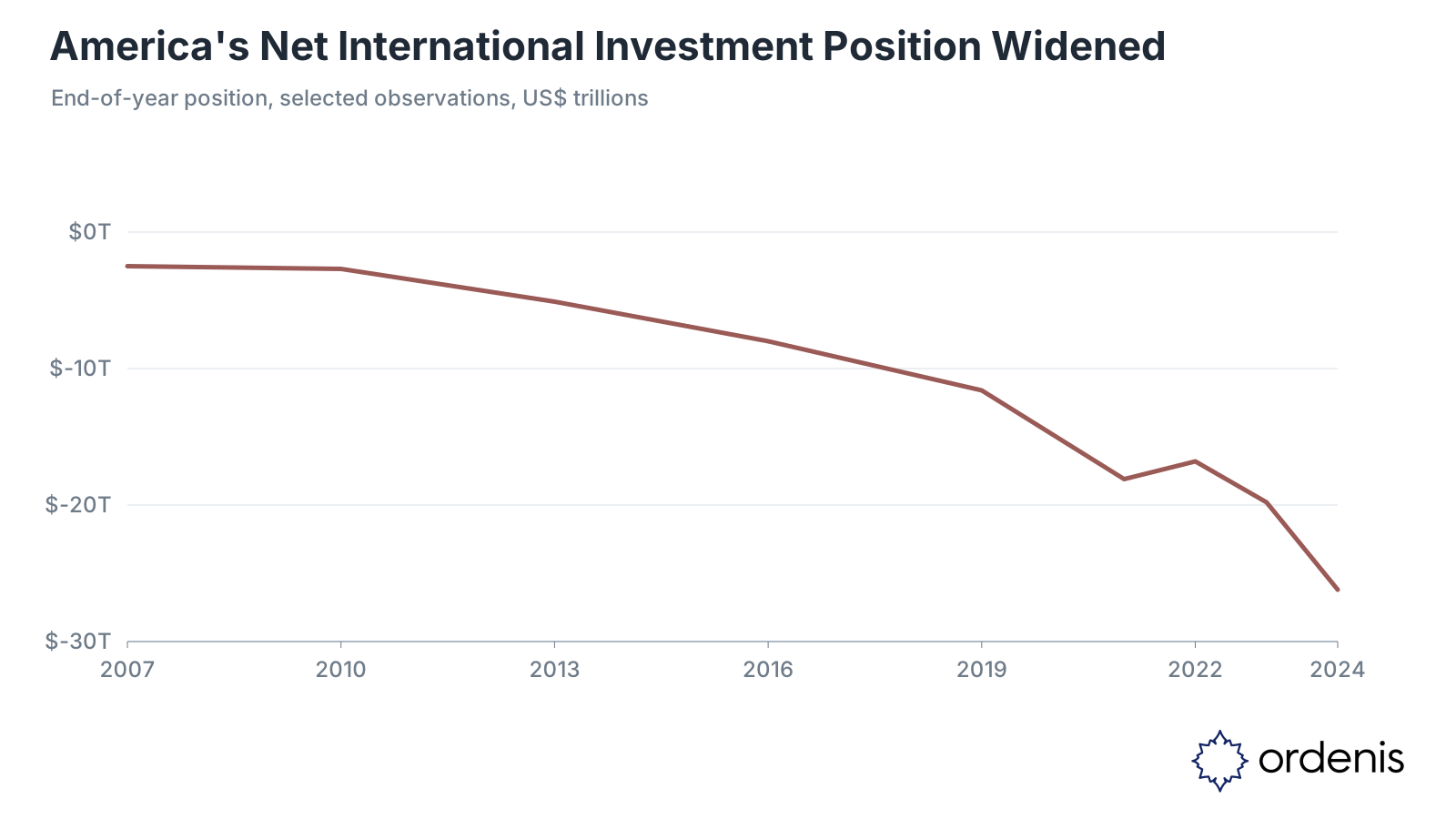
The widening U.S. net international investment position captures the persistent global preference for American assets and the scale of the liabilities financing them.
The financial version of that preference strengthened after the global financial crisis. Dollar assets offered deep liquidity and, over long periods, strong returns. Exporters in Asia, the Middle East and Europe accumulated dollars and recycled them into U.S. assets, creating a feedback loop in which capital inflows supported valuations, the dollar and Treasury liquidity.
How the exception was financed
Since 2008, the cycle has alternated between conventional quantitative easing, tightening, emergency asset purchases and forceful rate hikes. The policy switch changes the speed of the system but not its basic direction: fiscal deficits put assets into private hands, while global savings return to the U.S. market.
The U.S. net international investment position became more negative after 2008. Financial investment makes up roughly 54% of the liability side and foreign direct investment another 18%. Foreign investors hold about one-fifth of U.S. securities; around 55% of that exposure is in equities and 25% in Treasuries.
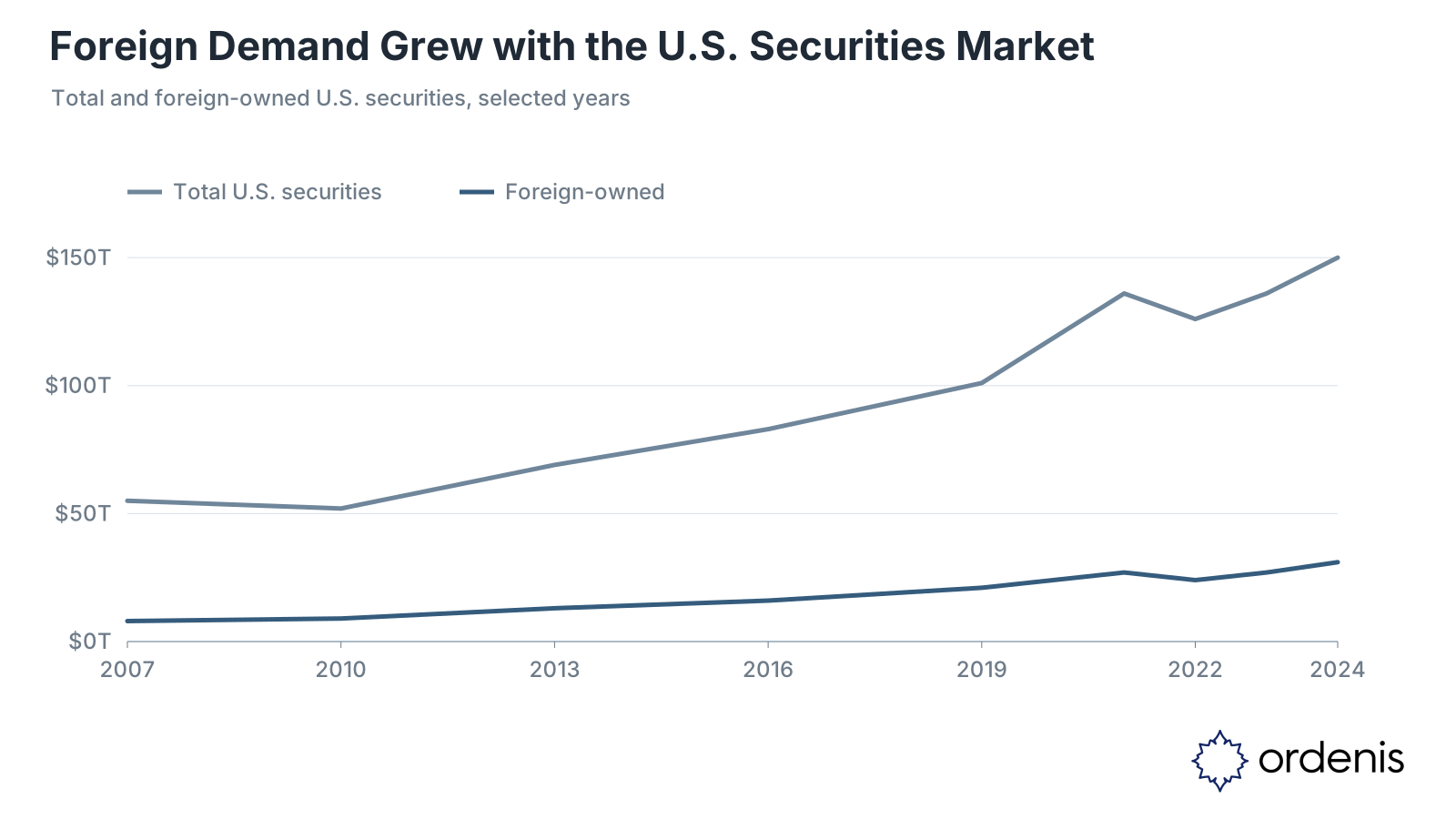
This flow is not mysterious. Export economies first accumulate dollars, then allocate them according to five practical needs:
- Official reserves. Nearly 60% of global official reserves are dollar-denominated, and Treasuries remain the most usable reserve instrument.
- Passive allocation. U.S. equities account for more than 60% of major global benchmarks, so ETFs and pension plans buy America by default.
- Liquidity. Treasuries are the dominant repo collateral for financing, hedging and leveraged strategies.
- A rate anchor. Treasury yields set the discount rate for corporate bonds, equities, real estate and commodities.
- Monetary policy transmission. Treasuries sit at the center of the Federal Reserve's balance sheet and of every QE or balance-sheet reduction cycle.
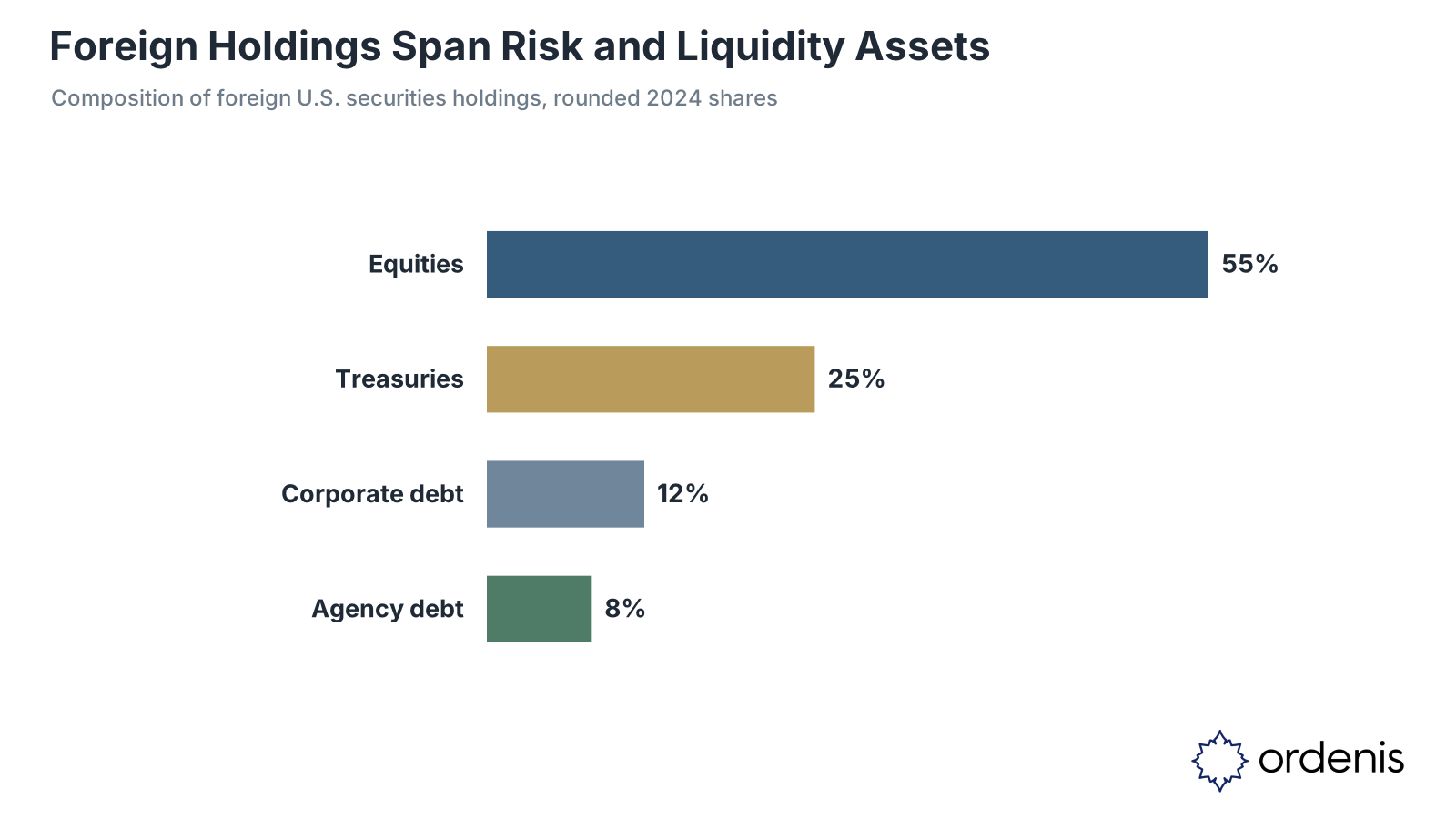
Treasuries are the foundation
Foreign investors may prefer U.S. equities when growth is strong, but Treasuries remain the principal liquidity and collateral instrument inside the dollar system. Global savings finance the U.S. government's fiscal channel, keeping liquidity available and supporting corporate revenue and equity prices. The same channel is the system's largest concentration risk.
For a company, debt capacity depends on cash flow and assets. For a sovereign, it depends on how much credit the state can mobilize and whether taxes and growth can service that debt. Treasuries combine contractual repayment, the ability to roll maturities and exceptional liquidity. They are therefore the world's primary reserve and collateral asset, even when investors no longer treat them as literally risk-free.
The long decline in yields shows how powerful that demand became. The monthly average ten-year Treasury yield was close to 8% in late 1994 and below 1% during 2020. Global savings, central-bank policy and low inflation helped anchor funding costs across those decades.
Moody's lowered the U.S. sovereign rating from Aaa to Aa1 in May 2025. A downgrade does not remove Treasuries from the system; it clarifies why they are held. Investors need liquid collateral and a place to recycle dollars. They do not need a perfect credit story.
The end of a one-way narrative
The U.S.-market preference is not reversed by a single event. The mechanism is being repriced. More debt requires more issuance; higher term premia make that issuance more expensive; and competing reserve preferences may reduce the willingness to absorb every new dollar at the old price.
The dollar system can persist for a long time. Its sensitivity is that the same foreign capital that funds the Treasury also owns the equity, real-estate and credit assets priced from its curve. The United States remains the largest and most liquid market; what is ending is the assumption that this scale guarantees ever-lower yields.