

A large share of international trade is invoiced and settled in dollars, and the currency remains the primary reserve and funding unit. The United States supplies the sovereign credit instrument at the center of that network. Four anchors sustain the arrangement: dollar assets, international trade, oil and commodities, and geopolitics.
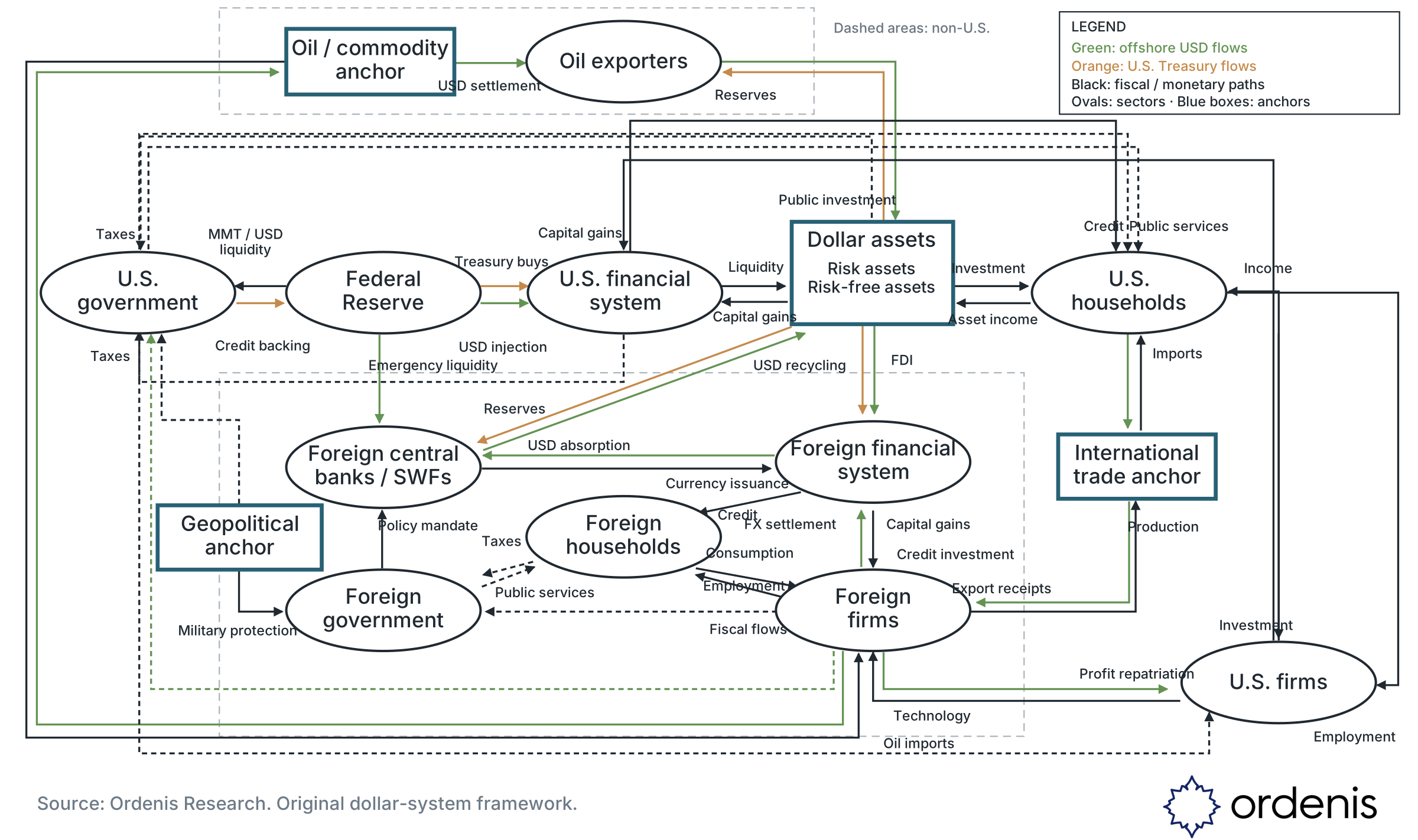
The dollar-asset anchor
The U.S. government builds sovereign credit on tax revenues and finances itself through Treasury issuance. The Federal Reserve can buy Treasuries from commercial banks in the open market, adding base money to the banking system and releasing dollar liquidity into credit and asset markets.
Exporters then complete the loop. A foreign manufacturer earns dollars and converts them through its domestic banking system. Some of those dollars accumulate as official reserves and return to U.S. markets through Treasuries and other dollar-denominated assets. Reserve managers may also hold gold, which sits outside the dollar issuer's balance sheet.
That global bid supports both high U.S. equity valuations and the Treasury market. The assets are not held only because investors like the United States. They are held because trade receipts need a liquid, scalable home.
The trade anchor
U.S.-based companies export technology while global manufacturing supplies goods sold into the U.S. market. The resulting trade deficit sends dollars abroad; the recycling of those receipts is part of the system's funding channel.
The exporter uses part of its dollar income to pay wages, suppliers, taxes and operating costs. The rest is absorbed by the official sector and parked in Treasuries or other dollar assets. The practical equation is simple: earn dollars, exchange them for local currency, fund the domestic economy in local currency, while the dollars return to America as asset income.
In an exporting economy, foreign-exchange earnings must first meet wages, taxes, social spending and investment. The central bank also manages the exchange rate, capital-flow volatility and its own balance sheet. Domestic demand absorbs the residual adjustment through inventories, credit and fiscal policy.
The oil and commodity anchor
The petrodollar structure emerged after the oil crisis and the collapse of Bretton Woods. Dollar-denominated oil contracts create recurring demand for the currency. Energy-consuming companies need dollars to settle their purchases; oil exporters then recycle those dollars into Treasuries and other dollar assets, while long-term security and commercial relationships reinforce the channel.
The exchange is best described as energy → dollars → Treasuries → security. Any country that wants reliable access to oil, energy or key commodities needs dollar liquidity. The dollar's clearing role therefore depends on access to the energy system as much as on bilateral trade.
The geopolitical anchor
Security relationships can reinforce reserve preferences. Japan, Saudi Arabia, South Korea and the European Union combine deep commercial ties with the United States and long-standing security relationships, linking part of their reserve management to dollar liquidity.
This creates a feedback loop between security ties and credit markets. Central banks and sovereign funds value Treasuries for liquidity and collateral as well as for the wider stability of the relationships around them. Dollar credit is therefore supported by financial institutions and by a geopolitical component that is difficult to price directly.
The arrangement is practical rather than frictionless: the United States issues and services the core sovereign asset, while foreign economies earn dollars and hold dollar assets. Most participants rely primarily on trade and financial-market liquidity, and each bears part of the recycling mechanism's cost.
Export receipts and domestic obligations
Export receipts support domestic cash flows while the dollars can pass into private portfolios or official reserves. These are linked stages of the same funding cycle. They do not create two separate pools of profit.
Exporters use local-currency proceeds to meet wages, operating costs and taxes, with the remainder available for earnings and investment. Banks, private investors or reserve managers hold the corresponding dollar claims. The exporter keeps its domestic obligations while those claims circulate through the dollar system.
The surplus is absorbed by domestic fiscal needs, held as dollar reserves and exposed to the credit cycle of the issuer. The United States also faces constraints from fiscal deficits, Treasury issuance, long-duration funding costs and the external balance.
This balance survives because every participant still needs the next link in the chain. A change in reserve preference, trade settlement, energy access or security commitments would reprice dollar credit everywhere.