

AI makes many research tasks cheaper and faster. The gain still depends on the person using it: how well they frame the problem, test an assumption and recognize an answer that sounds better than it is. The practical advantage remains personal: ask better questions, build a better research process and protect the attention required to use both.
The tool changes the value of the worker
Production tools have always outsourced part of a human function. A blade extends the hand; a machine extends physical labor; a computer extends calculation. AI operates directly on cognitive work.
Models are strongest at retrieval, enumeration, transformation and repetition. Humans remain responsible for defining the problem, linking weak signals and choosing under uncertainty. As the tool barrier falls, the quality of the user's model of the world becomes easier to see.
Good questions begin before a prompt is written. They require a view of what matters, which evidence would change that view and what decision the answer must support. Knowledge changes too quickly for memorization to be the durable edge. The durable edge is the ability to absorb a new variable and revise the frame without losing the question.
Attention becomes more valuable in the same way. When information is abundant, the constraint shifts from access to selection. Repeatable work compresses; problem definition and accountable judgment do not.
AI makes the research process visible
“Analyze this company” is a perfectly reasonable place to start. The quality of the final work depends on what happens next: scope the question, choose the sources, define the data, state the assumptions, build the controls and decide how the result will be tested.
Natural language makes powerful tools easier to use. The benefit depends on the workflow: a model can help test a well-defined hypothesis, but a broad request for information may simply produce a longer reading list. A stronger model amplifies structure and ambiguity alike.
Research is a chain: read, form a hypothesis, express the claim, turn it into an article, model or decision, then test the result. AI can shorten every link and preserve context between them. The bottleneck moves from “can one person execute the task?” to “can one person define and validate it?”
New factors of production
Token budgets, proprietary data, reusable skills and automation are becoming capital equipment for individual productivity. A public chat interface makes many people somewhat faster. A well-built research system allows a smaller group to produce work that would once have required a larger organization.
Cognitive capital is the accumulated knowledge, judgment and working methods that make the next research problem easier to solve. AI increases the return on that stock when it helps a researcher reuse and improve it.
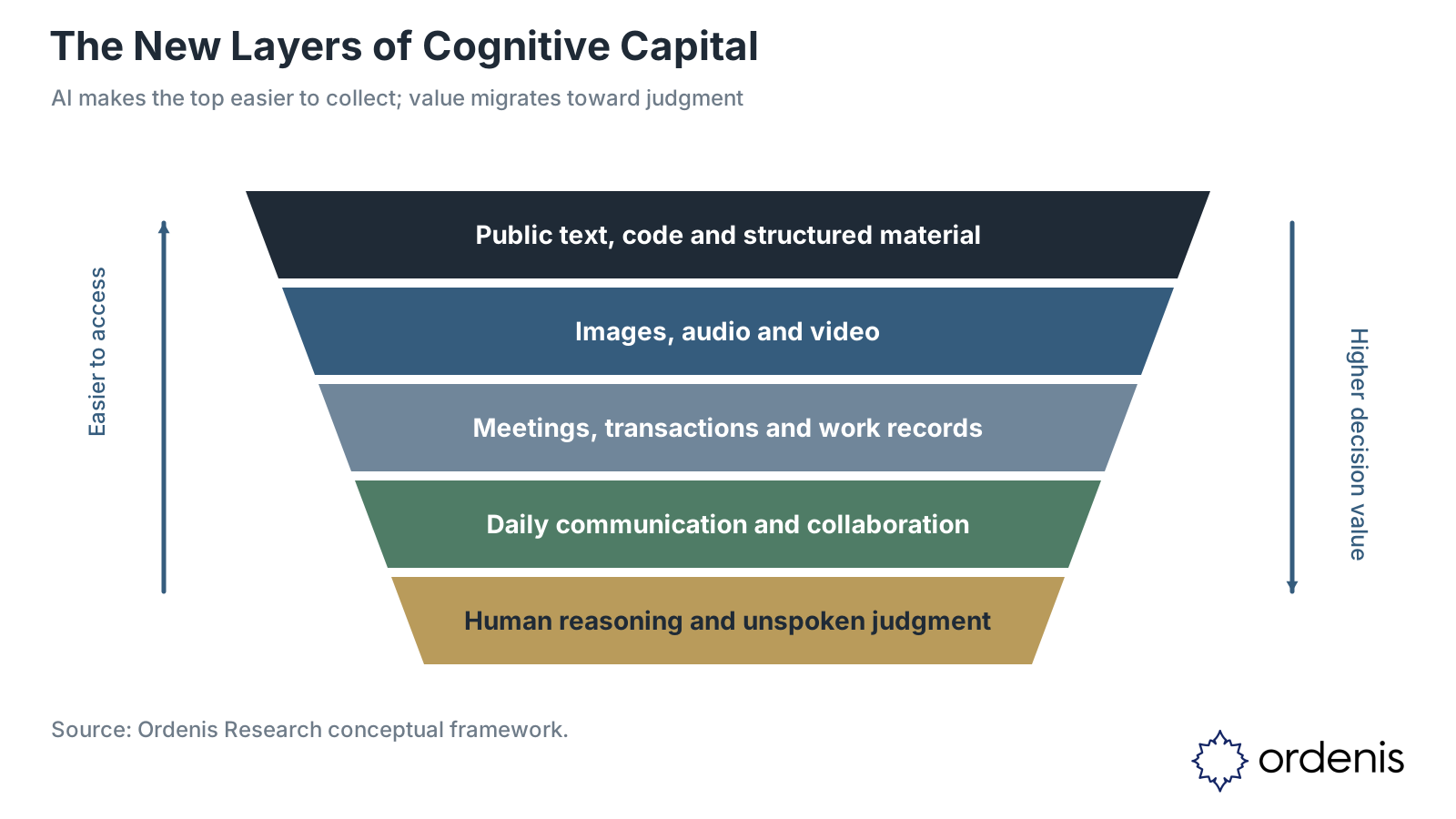
Public text and code are the easiest layers to collect. The more valuable layer sits deeper: workflows, disagreements, edits, failures, situational judgment and the feedback connecting an action to an outcome. Those records are hard to create, label and preserve—and that is precisely why they matter.
A mature skill is more than a clever prompt. It binds the information entry point, tool calls, failure cases, validation rules and output standard. It behaves like a production line.
AI will expose differences in judgment more quickly, but it will not carry responsibility for the decision. The personal edge belongs to the people who improve their models of the world, preserve evidence of how they worked and keep enough attention to revise both.